
Vaccinations, Worming Advice and Healthcare Programmes
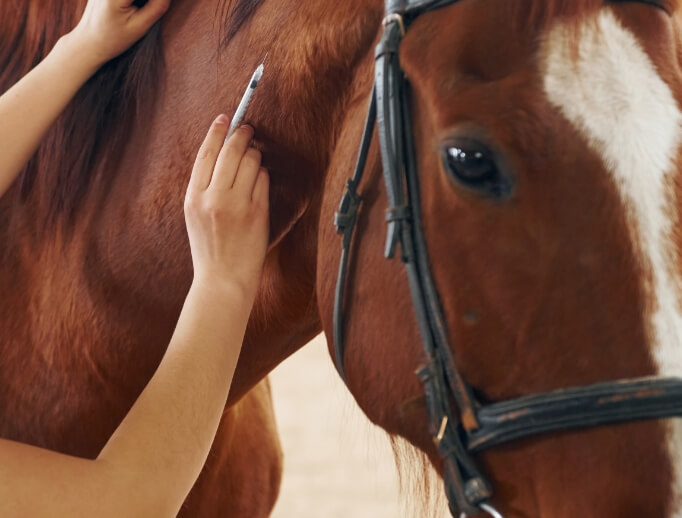
We advise that all horses receive vaccinations for both tetanus and equine influenza. This helps establish immunity across the equine population as well as providing the individual horse with protection.
The thoroughbred industry recently changed the primary vaccination course protocol for equine influenza.
Thoroughbreds are now required to have an initial vaccination followed by a second vaccination at 21-60 days later, followed by a third vaccination 120-180 days after the second. Booster vaccinations are required every six months.
Different societies have different requirements for equine influenza vaccinations. Please double check in advance with your society well in advance of competitions or events.
Tetanus
Tetanus bacteria are commonly found in soil and can enter your horse’s bloodstream via cuts and wounds. The disease has a high fatality rate in unvaccinated horses. The vaccine can be administered either alone or in combination with the equine influenza vaccine.
The initial vaccination involves two injections given 4-6 weeks apart, followed by a booster dose at 12 months and then every 2 years thereafter. All mares should receive Tetanus vaccination before foaling to ensure that their colostrum contains protective antibodies which foals receive via passive transfer.
“We recommend that you vaccinate your mare against tetanus in the last trimester of pregnancy, roughly a month before her due date, in order to boost antibodies against tetanus in colostrum which will therefore provide protection to her and her foal.
EHV-1 and EHV-4
EHV-1 and EHV-4 can lead to abortion in pregnant mares and respiratory and neurological disease in all horses. Broodmares should be vaccinated against EHV-1 and EHV-4 three times during gestation while other horses should receive an initial primary course followed by six monthly booster vaccinations. These viral diseases that can spread from horse-to-horse contact, such as horses touching noses, coughing or snorting. They can also spread via shared equipment such as tack and feed bowls. These viruses can lay dormant in a horse following initial infection but become reactivated in stressful situations.
Equine Rotavirus
Equine rotavirus is among the most common causes of diarrhoea in foals under six months. It inhibits digestion and food absorption as it damages the lining of the intestines. Pregnant mares should be vaccinated at 8, 9 and 10 months of gestation to minimise the risk and severity of rotavirus diarrhoea in young foals.
Strangles Vaccines
Strangles is a highly contagious disease. It is caused by a bacteria called Streptococcus equi subsp. Equi. The disease causes depression, inappetence, fever, purulent nasal discharge, cough, and abscesses – mainly on the head and neck.
Vaccinations are recommended for horses with high risk of infection for example those at risk of being exposed to horses with clinical signs of strangles ; mixing with many other horses and travelling to shows often. Strangvac is an intramuscular vaccine with an improved safety; it uses only the bacterial proteins needed to induce immunity. It allows us to differentiate vaccinated horses from horses with clinical infection on laboratory tests. The vaccine does not completely eliminate the risk of infection, but significantly reduces the rates of infection and severity of the disease.
It is recommended to administer 2 doses a month apart, with booster doses between 6 and 12 months apart, based on individual risk assessment. Horses that had the last dose administered more than 2 months prior to contact with a sick horse can be revaccinated to maximise the vaccine efficacy.
Vaccination of the whole yard is the best approach, although vaccination of an individual horse can also be beneficial in case of an outbreak.
The move to prescription only wormers was driven by growing concerns surrounding resistance and inappropriate usage. Misuse and overuse of wormers significantly contribute to resistance and reducing the effectiveness of treatment. Individual yards may require individual protocols based on the unique population and potentially known resistance issues in the area.
Different wormers contain different active ingredients and vets are trained to select the most appropriate product for your horse, based on age, time of year, and life cycle of individual worms.
Faecal worm egg counts are a valuable monitoring tool, but they do not detect all parasites. Encysted small redworms (cyathostomes) can cause serious illness, such as diarrhoea, gut damage, and even death. They cannot be detected on faecal worm egg counts, they are only detectable via a blood test which needs to be interpreted carefully by your veterinarian. Ascarids can cause respiratory illnesses, particularly in youngstock, because they migrate through the lungs. It is extremely rare to find their eggs in a faecal worm egg count, so if you do, you can be sure to have a heavy burden.
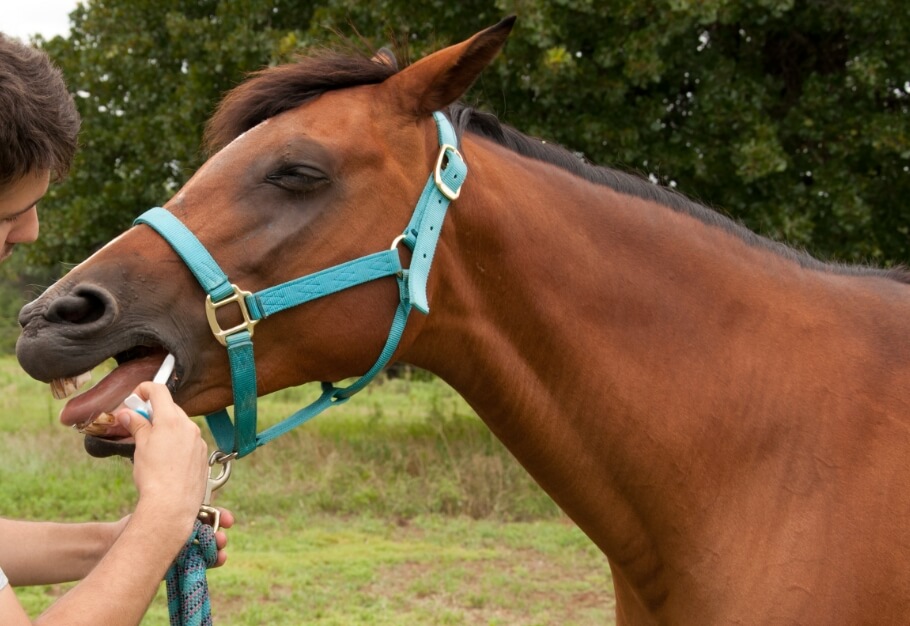

Tapeworms also cannot be reliably identified on faecal worm egg counts, but can be assessed through an Equisal Test. It is quick, simple and especially valuable heading into Winter. For these reasons, faecal worm egg counts should be used alongside additional testing methods and veterinary advice to ensure complete and effective parasite control to keep your horses happy and healthy.
Please ask us to design a health programme specific to your farm.
Prevention is better than cure.
Your veterinarian is trained to provide you with a worming protocol which is based on the lifecycles of the parasites, season, your horses age and previous history, which will ensure targeted treatment for those whose burden cannot be identified by faecal worm egg counts. Whilst faecal worm egg counts are a valuable tool, they only tell part of the story. Many harmful worms do not produce detectable eggs, yet can still cause serious health issues or even death. Prescription oversight ensures these risks are properly managed to ensure your horses health and reduce unnecessary expenditure.
If you need any further advice on worming your horse or guidance on which products to use, please don’t hesitate to get in touch. We are always happy to help ensure your horse’s parasite control plan is safe, effective and tailored to their needs.